Loading Securanote...
Loading Securanote...
Sophie was already running late when she stepped out of the black cab near her hotel in London. She paid quickly, thanked the driver, and pulled her suitcase onto the sidewalk. The taxi pulled away. Only then did she reach for her phone — the reflexive check everyone does — and feel nothing.
Her phone was still on the back seat.
By the time she turned around, the cab was gone, swallowed by traffic. No phone. No wallet. Her passport wasn’t physically lost, but every copy of it — the photo she’d taken before the trip, the confirmation emails, the two-factor authentication apps she relied on — all lived on that phone.
Standing there on a London street, Sophie realized something unsettling: losing the phone wasn’t the real problem.
Losing access was.
Over the next two days, Sophie did everything right. She went to the hotel desk, she contacted the taxi company, and she visited the embassy website from a borrowed laptop. And over and over again, she hit the same wall.
“We need proof of your identity to confirm.”
“We’ve sent a code to the registered device.”
“Do you have a copy of your passport number?”
She didn’t.
Each small issue multiplied. Her bank temporarily locked a card. She couldn’t log into email to retrieve booking details. She needed to call home, but the contact numbers she relied on were — again — on the missing phone. Nothing catastrophic happened. But nothing was easy, either. The stress wasn’t fear. It was friction. Endless, draining friction.
Most people think travel emergencies are about theft, danger, or worst-case scenarios. They’re usually not. They’re about:
The real risk isn’t losing something. It’s losing the ability to prove who you are — or let someone help you — when you’re not in control.
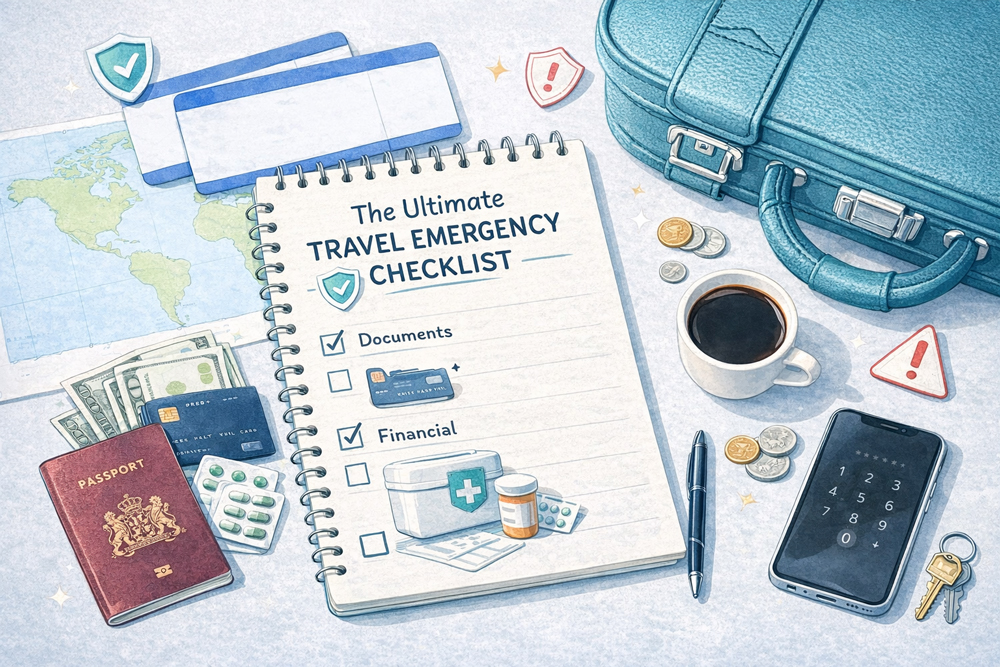
Imagine the same London taxi ride — but with one difference. Before the trip, Sophie created a single secure note. It contained:
Imagine if she had shared that note with her sister and set it to expire at the end of the trip. When her phone was lost, Sophie would still have to deal with the inconvenience — but the downward spiral would have stopped earlier, and more quickly. Her sister could make calls. She could forward documents. She could help without guessing, oversharing, or scrambling. That’s the difference preparation makes.
You don’t need everything. You need the right things.
Store securely:
Avoid storing insecurely:
Preparation isn’t about hoarding information. It’s about access with boundaries.
Most people don’t prepare because they don’t want to imagine things going wrong. But preparation isn’t pessimistic. It’s considerate. It’s making things easier for yourself, when you’re tired and stressed. And especially for the people you need to help you. A lost phone in the back seat of a taxi shouldn’t derail a trip — or turn into days of frustration.
If you have two minutes, create a secure travel note with the essentials and share it with one trusted person - before you travel. Not because something will go wrong. But because if it does, you won’t be starting from zero.
You’ll probably never need it. And that’s exactly the point.
Create your first end-to-end encrypted, self-destructing note in minutes. It’s free to get started.